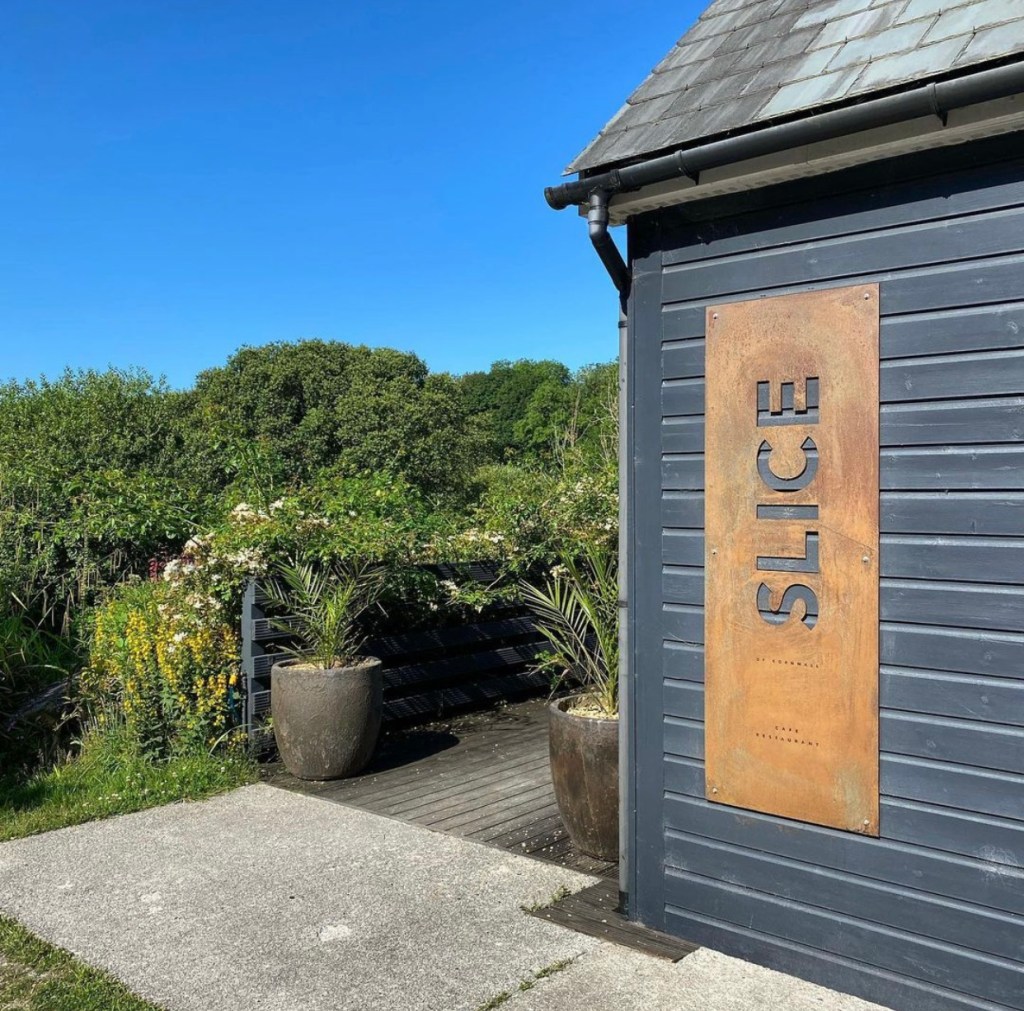
The first place on my list to review is 100% my favourite spot I’ve found while in Cornwall. Tucked away on the lanes of Constantine, is Slice of Cornwall. Open 9 to 4 every day, they serve coffee and cake, as well as an outstanding lunch and breakfast menu. What makes this little barn so unique is they’re not serving bog standard sandwiches and pastries, they’re offering mind blowing dishes that are worth what you pay for.
Instagram: slice_of_cornwall
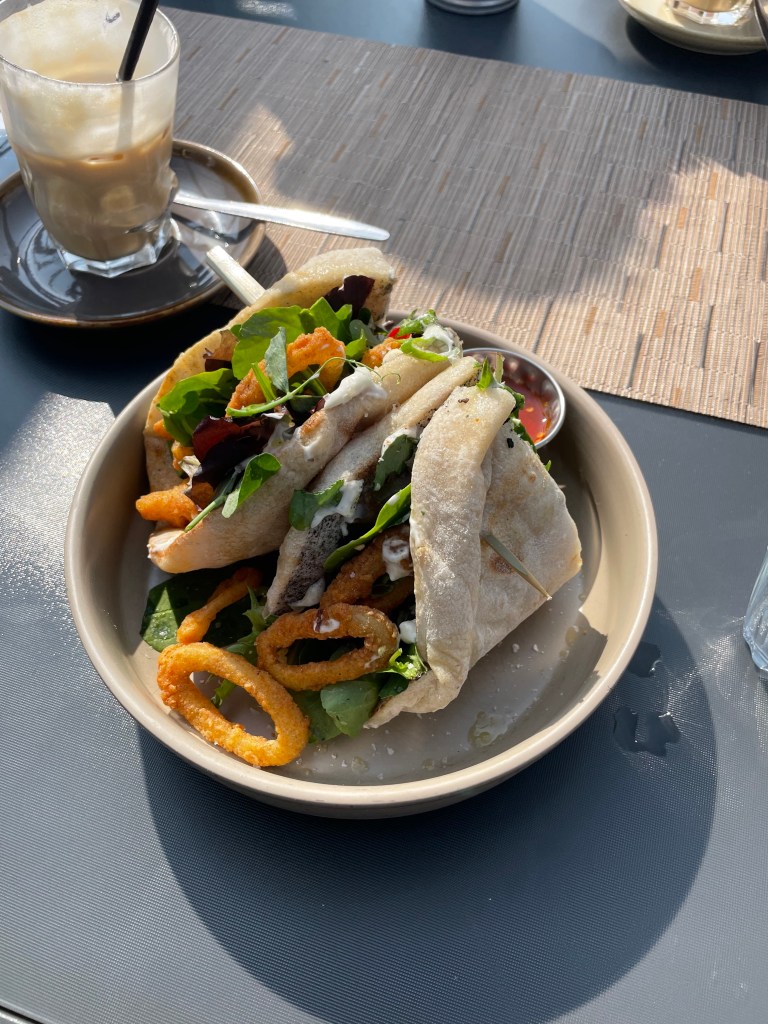
My absolute favourite thing to order here is the ‘Cala’ wrap. Crispy squid, lemon and garlic mayo, and salad, served in a stonebaked sourdough flatbread. This wrap is so filling, and so rich in flavour. It comes with a pot of Slice’s house sweet chilli sauce, which is mouth watering. It’s my go to dish every time I come (which is almost too often) and I am always impressed at the consistent quality. I also love that it’s affordable, which as a student is hard to find! This wrap is only £13.75.
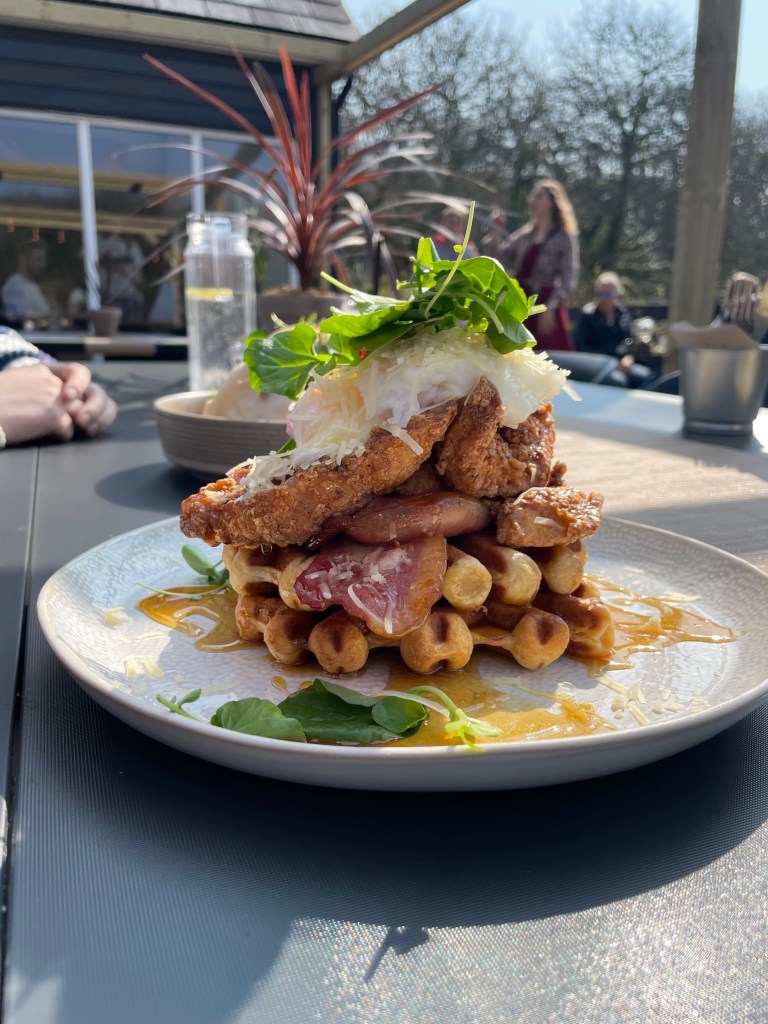
Another favourite in our house are the ‘Loaded Chicken Waffles’. Ollie has ordered these almost every time we have visited, and they always look phenomenal. Two sweet waffles, stacked with crispy chicken, smoked bacon, poached eggs, maple syrup, and parmesan, this item is a sight to behold, and worth the £14.85.
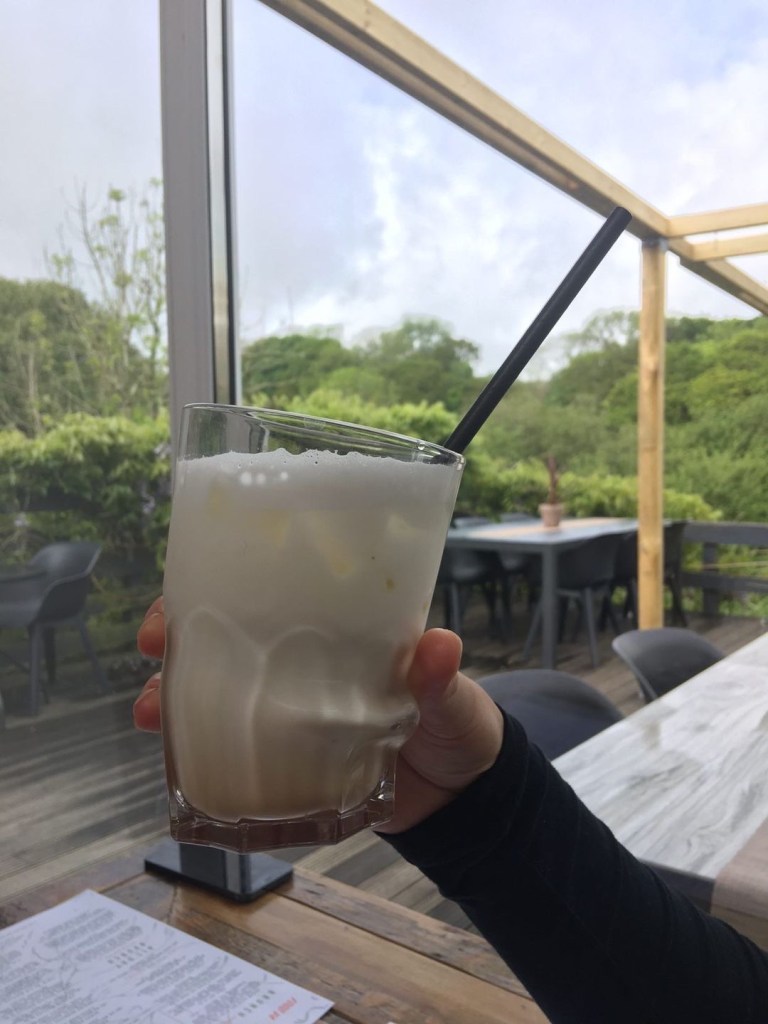
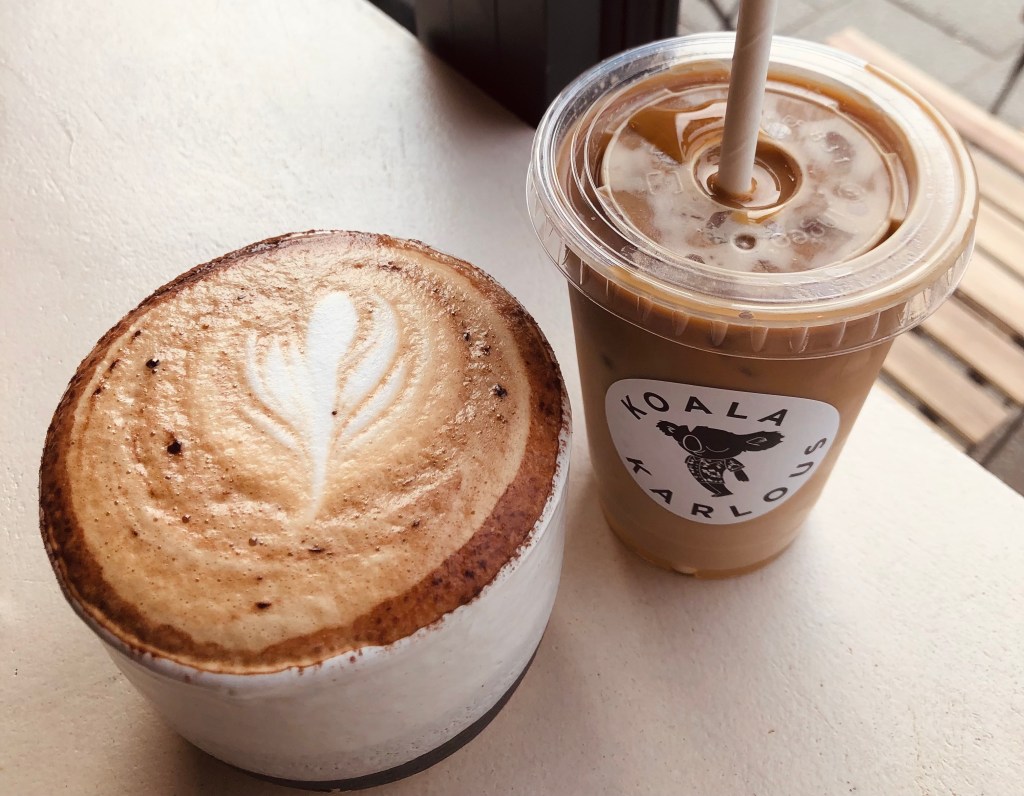
Another incredible niche that this cute place has is their glasses. Bear with me! Sounds boring, but the cups that hold their iced drinks are the coolest thing ever! They look like a plastic cup that has been squashed, which is such an impressive aesthetic.
I highly recommend visiting Slice if you ever get the chance. To sit inside it’s probably a good idea to book as they are very popular! They also have an outside deck area that is first come first serve, and the view is amazing.
Where am I taking this blog over summer? While off on my summer break from uni, I want to keep this blog up and running, engaging with the cafes and restaurants surrounding not only Falmouth, but other places in the South West that I love. I’m going to be traveling Cornwall, as well as visiting places in Devon such as Dartmouth, Totnes, Exeter, and Crediton. While on my adventures I’m going to be visiting and reviewing hidden gems, as well as your recommendations!
Where would you like to see me try out? Comment below! Can’t wait to try some new places and have new experiences!
Fao.org. (2022). Results | Global Livestock Environmental Assessment Model (GLEAM) | Food and Agriculture Organization of the United Nations. [online] Available at: https://www.fao.org/gleam/results/en/ [Accessed 5 Apr. 2022].
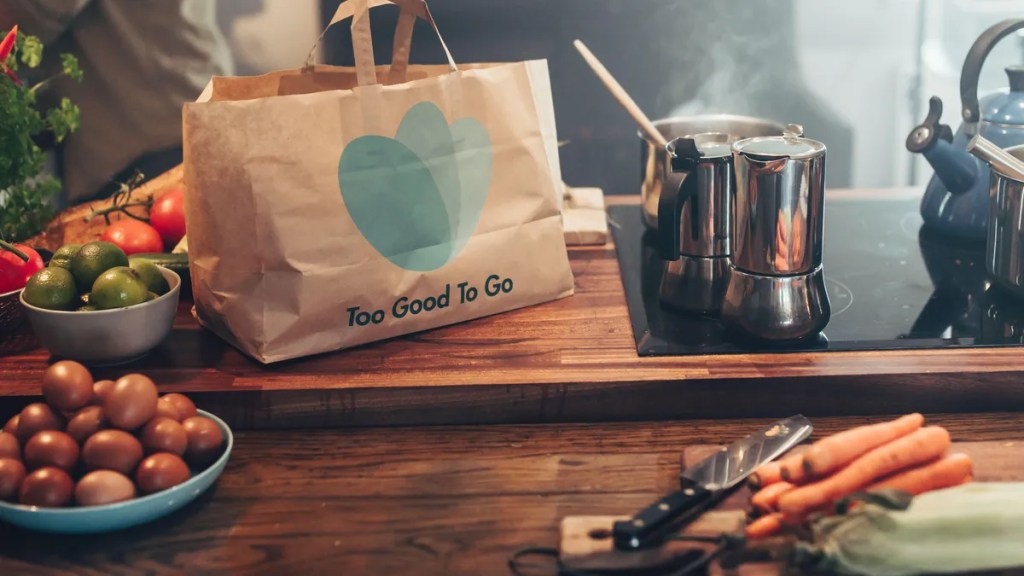
Creating my business plan for my own coffee shop, it’s so important that I consider as many sustainable options as possible from the start. Following my last blog post, I have researched many routes I can follow to reduce my business’ waste. While looking at how much food waste is generated I decided this was a very important issue for me to resolve. Some of these include donating the products I don’t need to food banks, as well as offering discounts at the end of the day, and ‘pay it forward bags’. The supermarket Morrison’s have introduced ‘Pick up Packs’ that range in price, and inside contain essentials such as fruit and veg, canned goods, rice, and pasta that can be bought at the checkout and then donated to the foodbank. Interpreting something like this into a coffee shop would benefit the local community, by allowing people to pay a discounted price for the food that will be thrown away at the end of the day and donate it to foodbanks or even homeless people around their local area (Morrisons 2022). Another company promoting zero waste is the app ‘Too Good to Go’. Currently being used by 19,103 and UK businesses, this app allows customers to reserve cheap surplus food bags in the morning, and then collect them in the afternoon before the business closes. These bags contain any food that would have been going to waste, for a heavily discounted price. Big chains such as Starbucks, Costa, and Yo! Sushi are using this app, and it is currently being used by 8.4 million customers, with 76% returning as regular customers (TooGoodToGo 2020). Signing up for an app like this would help lower waste, as well as win back sunk costs. It’s a sustainable way to continue to order enough stock, while engaging with customers.
Too Good To Go bag (Alison DeNisco Rayome, 2020)
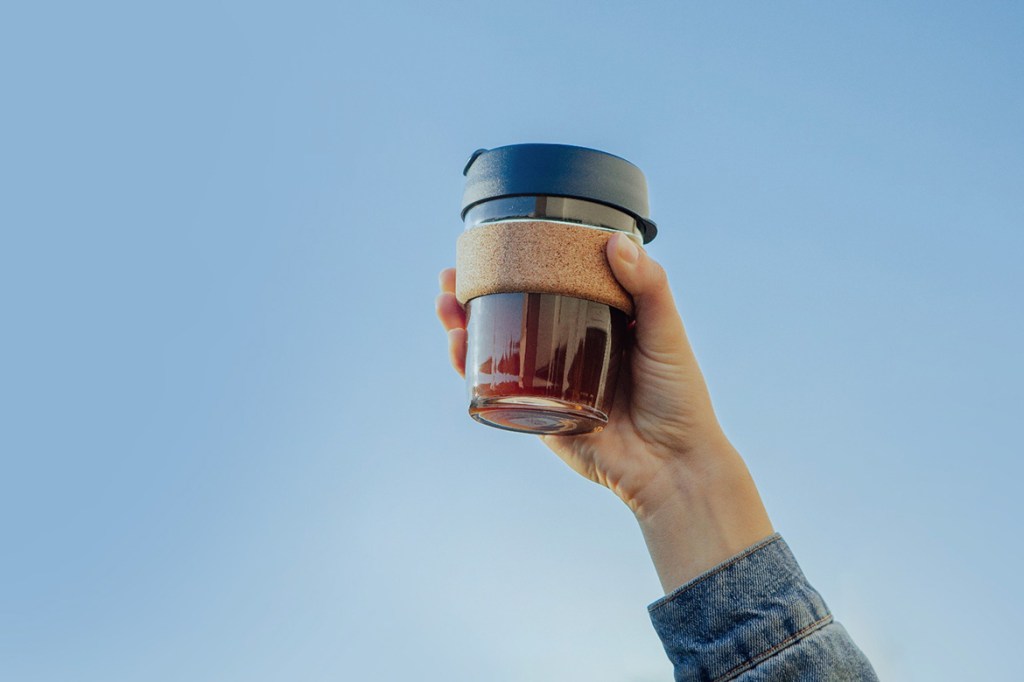
The biggest culprit of waste within coffee shops is cups, and I would like a wide range of options available to my customers so they can do their part. Firstly, offering my own branded reusable cups, available to purchase within store with an incentive, such as a free hot drink when you first purchase, and money off all drinks when you use a reusable cup. Businesses such as Starbucks currently offer a 25p discount to all customers who bring their own cups, which is something I could also offer (Starbucks 2020). Ensuring that the reusable cup options I offer are also sustainable products themselves is also something I have researched. KeepCup is a company that offer barista grade reusable coffee cups, focusing on minimising waste throughout the manufacturing process. Any waste plastic throughout the process is returned to the manufacturer to be used to manufacture other products (KeepCup 2017) . They offer personalisation, as well as wholesale orders, so that I can add my busines logo to it. This personalisation and incentive will encourage regular customers to cut down on their waste in a conventional way.
(KeepCup 2017)
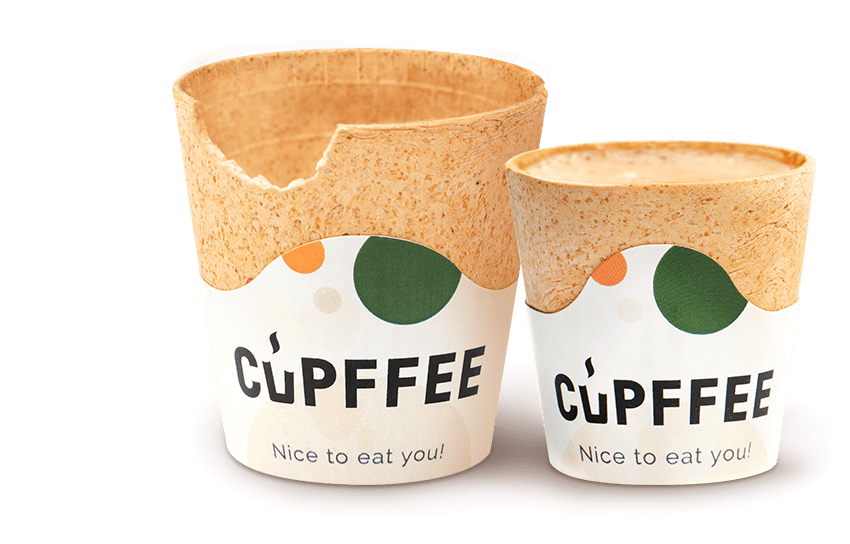
Another cup option I have researched is edible coffee cups. There are currently two companies leading the edible coffee cup scene; BioBite, and Cupffee. Both are vegan, and wafer based edible cups. I have chosen to research Cupffee more in depth as I have personally used this product. Cupffee is a Bulgarian company offering two sizes of wafer cups, holding liquids of up to 85°C for 40 minutes, and are low calorie. They also provide a recyclable carton holder, so you can place your drink down, that can be customised with your brand logo. This has been used by brands such as Bosch, H&M, and Nescafe (Cupffee 2021). For customers, this option offers a quirky and tasty way to reduce their cup waste, while also getting an extra snack. Although perhaps not appealing to those looking to grab a quick coffee, those who are looking for more of a slow stop off would most likely be the key target market. Despite being slightly more expensive, this product could also be charged per cup, creating a profit. It would also give my business a USP on top of the clear push for sustainability.
(Cupfee 2021)
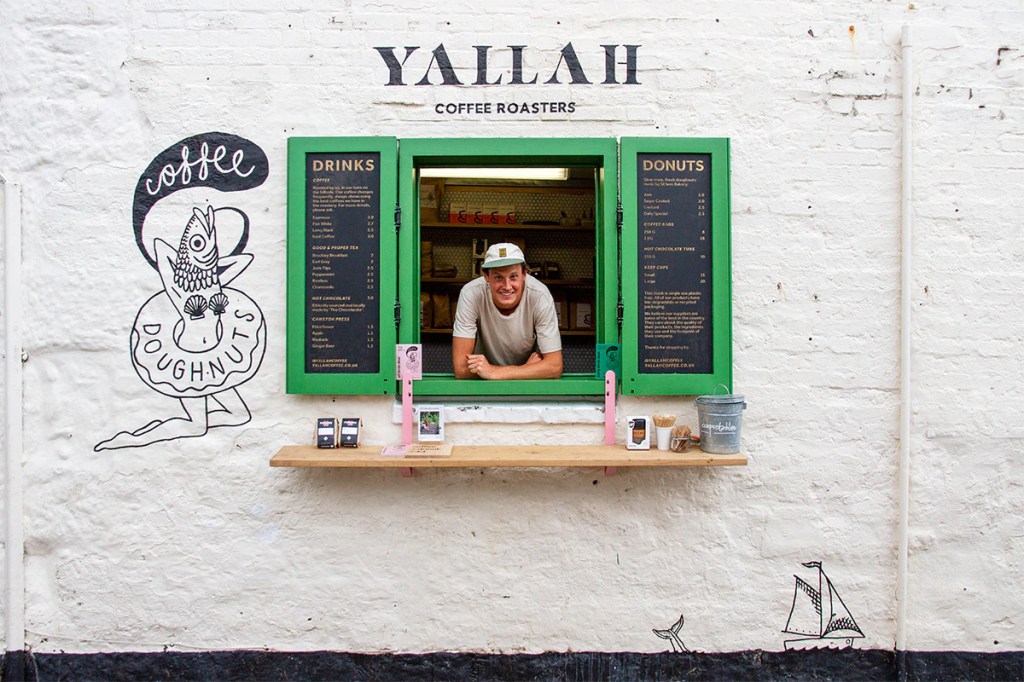
The next decision to make is what coffee to use and stock. Local to Cornwall is the coffee roasters Yallah. They promote social, economic, and environmental prosperity while minimising their company’s impact. They import their coffee by sail which is a carbon free alternative, and use 100% plastic free packaging wherever they can. They also power their roastery with renewable energy, which are steps that genuinely make a difference to the planet. Their packaging strives to be some of the most sustainable on the market, with their 250g bags boasting the only product in the world to use ‘earth pouch’ material. They are 100% plastic free, and make recycling easy by being accepted with household paper. Their 1kg bags are Omnibiodegradable, meaning they will breaking down in a variety of environments. They leave behind organic biomass which is beneficial to plant growth. Partnering with Trees For Life, they fund projects to plant trees and rewild the Scottish Highlands, as well as helping with native animal reintroduction (Yallah 2021). Supporting a local coffee provider that gives back to the people and planet, as well as one that produces high end coffee is essential to the backbone of a coffee shop.
Yallah Coffee Kiosk in St Ives (Yallah 2021)
These choices are only a very limited selection within a very broad range of issues, but when it comes to finalising my plan and putting things into place I can revise those choices and make even more finishing touches.
Every year, coffee shops hand out an estimated 250 billion paper cups (Fresh Cup Magazine 2019), and then 99% of these end up in landfills (KeepCup 2017). However, cups are not the only item which mass produces waste within coffee shops. Food containers, straws, milk cartons, syrup bottles, a small amount of the things that end up as waste in coffee shops. Offering the used coffee grounds to customers to use in gardens is a popular alternative to throwing it away. These grounds are beneficial as fertilizer, good for absorbing strong odours, and ideal to deter pests from eating your plants. Using mugs and glasses for all sit in food and drink, as well as reusable cutlery is an easy way to cut down on waste from cups and takeaway bags. As well as that, the amount of actual food and drink that go to waste is something that is rarely documented. In 2019, BBC Watchdog found that the majority of coffee shop chains such as Starbucks, Costa, and Caffe Nero were throwing away unsold food at the end of the day, rather than donating it to good causes. They called 100 stores, and 53 said they throw out leftover food. These 53 branches were Costa Coffee, Starbucks, and Caffe Nero. The 20 Pret stores called said they gave leftover food to charity, and 19/20 of the Greggs’ said they either donated it or sent it back to the business for recycling (BBC 2019). How can I adapt this feedback into my business plan? Let’s go the next post!
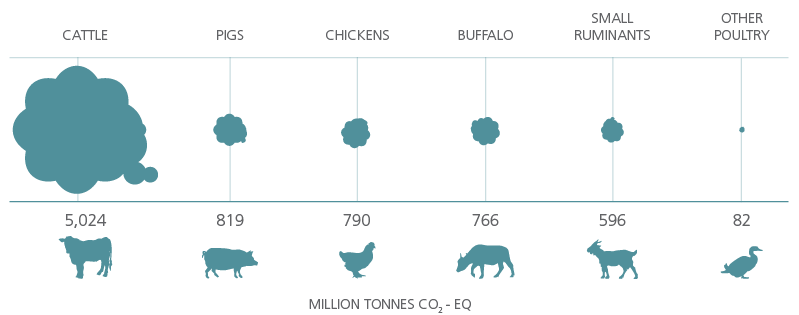
Although a plant-based diet is more well received now than ever before, the effect of it is lesser known. The Independent (2021) reported that researchers at Oxford University found that cutting meat and dairy products from your diet can reduce your carbon footprint from food by up to 73%. With carbon footprints being critical in reducing global warming, solutions like these may help the general public adapt their lifestyle. Why do meat and dairy products have such a negative effect on our planet?
Million Tonnes of CO2 produced per year per species (Fao.org 2022)
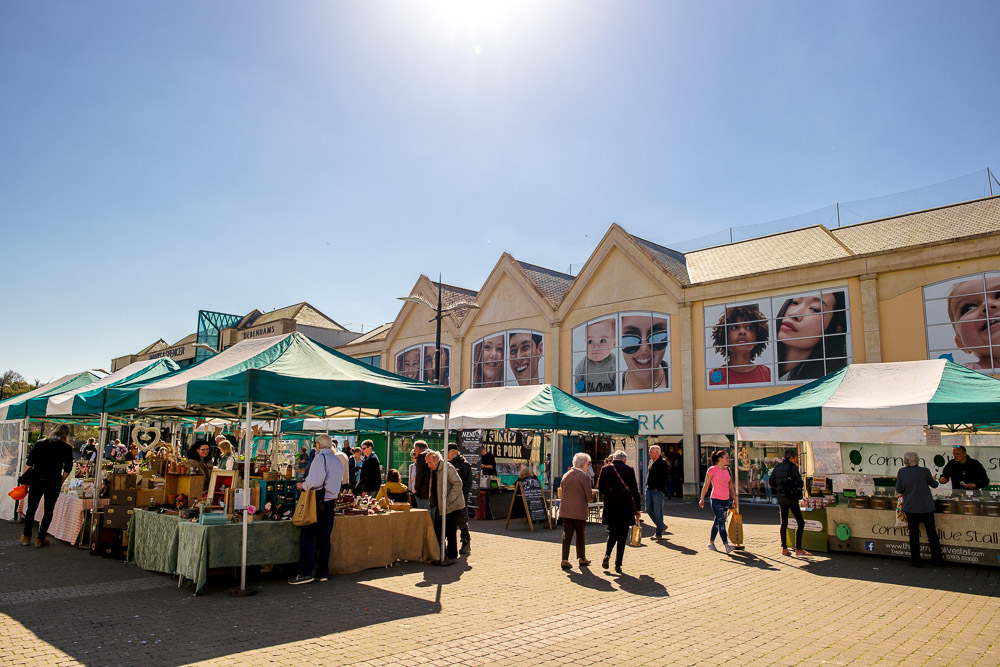
Meat, and beef in particular, contribute hugely to greenhouse gas emissions. It uses more land and water and causes more environmental damage than any other food product (Gray, BBC 2020). However, when developing a plant based diet, people should be mindful of where they are buying their products from if they are trying to be more sustainable. Air transported fruit and veg can create more greenhouse gas emissions per kilogram than poultry in some cases. Shopping local, such as farmers markets or farm shops, as well as local butchers even can help reduce those emissions and your carbon footprint.
.Reducing food miles and keeping your diet similar can be easy, it just takes some research! When buying and eating local, you are able to enjoy fresher produce, that is mostly organic and pesticide free. As well as this, you are supporting local workers and families. Why not visit your next local market and try and get some local produce!
The food and beverage industry is one of the most susceptible to changing trends, micro trends, and local trends. It is heavily influenced by social media, with other countries’ cultures taking a new lead in how people shop and eat. One of 2021’s biggest trends were focusing your diet on being plant based. The Guardian (2021) reported that 125,000 people in the UK took up the 2021 Veganuary Pledge to only eat plant-based food in January. This number has increased by 100,000 since 2020, and double the number in 2019. In 2019, a quarter of food products introduced in the UK were plant based, which is a huge increase from the one in six in 2018.
On a wider scale, many fast food chain companies have adapted the vegan lifestyle into their menus. McDonald’s introduced the ‘McPlant’, a vegan burger to rival the Big Mac. As well as that, Burger King brought Vegan Nuggets to the table, as well as adapting their two classics to become the ‘Plant Based Whopper’ and the ‘Vegan Royale’. Although they are a small change, compared to the hundreds of meat products already being offered, its promoting ways for people who perhaps couldn’t afford to change their general lifestyle, to try new foods.
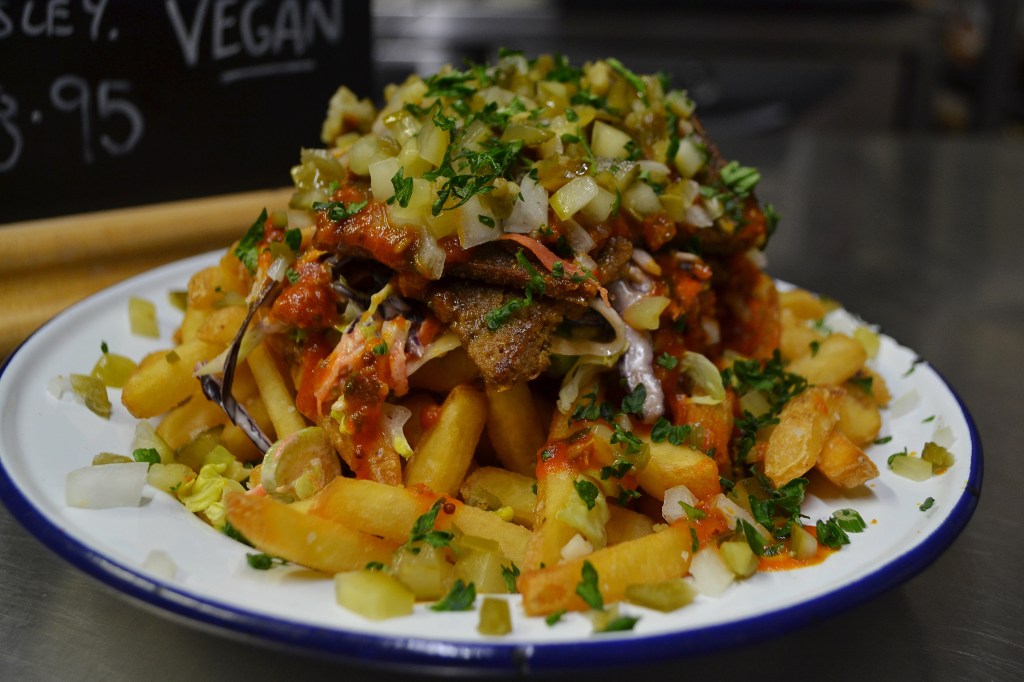
The Meat Counter’s ‘Doner You Want Me’ vegan special
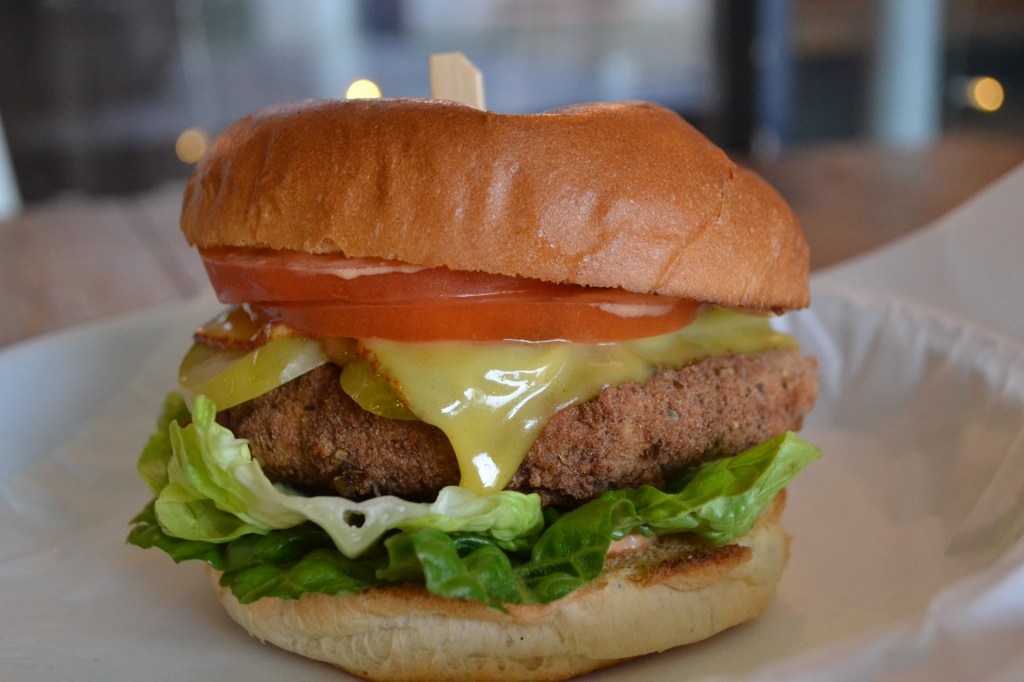
Locally to Falmouth, many businesses have also adapted. Sloth and Sparrow are a completely vegan restaurant, offering ‘chicken’ burgers, classic burgers, and loaded fries, as well as sides like mac and cheese, nuggets, and ‘cauli wings’. Other local businesses are adding vegan options to the menu, such as The Meat Counter. They feature vegan specials, as well as vegan burgers and sides that are on their standard menu. It’s a push that is being backed by communities, and it’s warming to see so many people keen to try this new diet.
The Meat Counter’s Vegan Burger
This change is also being taken on within many coffee shops. Starbucks have started offering vegan sandwiches as well as plant-based bakery products. The most notable change from Starbucks is the more recent decision not to charge for alternative milks. Previously, to have an alternative milk in your coffee, you had to pay an extra 40p, but as this began to be more highly requested, Starbucks made the impressive decision to scrap that policy, and increase the prices of all products to include the cost of those alternative milks and make the option free (Webber 2021). Pret a Manger has also followed this, dropping their charges on alternative milks and expanding their menu (Living 2020). On the other hand, Costa made the alarming decision to switch their alternative milk providers for Veganuary, now stocking the brand AdeZ. This choice has concerned many people with a gluten intolerance or Coeliac Disease, as none of their alternative milks are regarded as gluten free. Furthering the issue, Costa steam all their drinks with the same wand, so even dairy drinks would be contaminated (Buchan 2022). Although a step in the right direction, this issue shows that improving your sustainability must be carefully researched and the knock on effects considered. Locally to Falmouth, many coffee shops offer alternative milks. Forty Five offer oat, soya, and coconut milk, as well as plant based baked goods. Rubicund is an entirely plant based coffee and book shop, with affordable alternatives, as well as a welcoming educational environment. Koala Karlous is another local coffee shop that offers alternative options.
Today’s coffee shop industry brings in £10.1 billion every year, with the market growing by 10% each year and expecting to reach £25 billion in 2025. First appearing in the 17th and 18th Century, coffeehouses were a popular place from people from different backgrounds to meet and gossip and partake in the latest trend – coffee. It wasn’t until the late 20th Century that coffeehouses took on a new life, being reimagined and popularised by companies like Costa Coffee and Starbucks (Historic UK 2017). In the UK 80% of us visit coffee shops weekly, and 61% visit daily. This growing demand for coffee shops, along with the current political climate surrounding sustainability, brings forward many ethical and environmental concerns within the industry. Issues such as plastic waste, ethical sourcing of coffee, keeping up with the current trend in plant-based food and many more trouble new businesses each year. I’m passionate about coffee and the culture surrounding it, with my life ambition being to open my own unique coffee shop that offers something new and exciting to the town or city surrounding it. Having grown up in a vegan, zero waste and zero plastic household, global warming and other worldly issues have been at the forefront of my mind for most of my life and going forward it will continue to be an important aspect of my life and my work. Creating a business that caters to your community and provides them with coffee and cake, while being mindful of the ever changing world around you is a challenge, and one that I would like to tackle. What is there to consider when accepting this challenge? There are two sides to all businesses; the customers, and the business itself. Both parties can make sustainable decisions that will impact each other, and over the next few posts I would like to take a look at what these decisions could be, and how they are being introduced into society. Who knows, maybe you’ll take on some of these changes to your coffee routine?
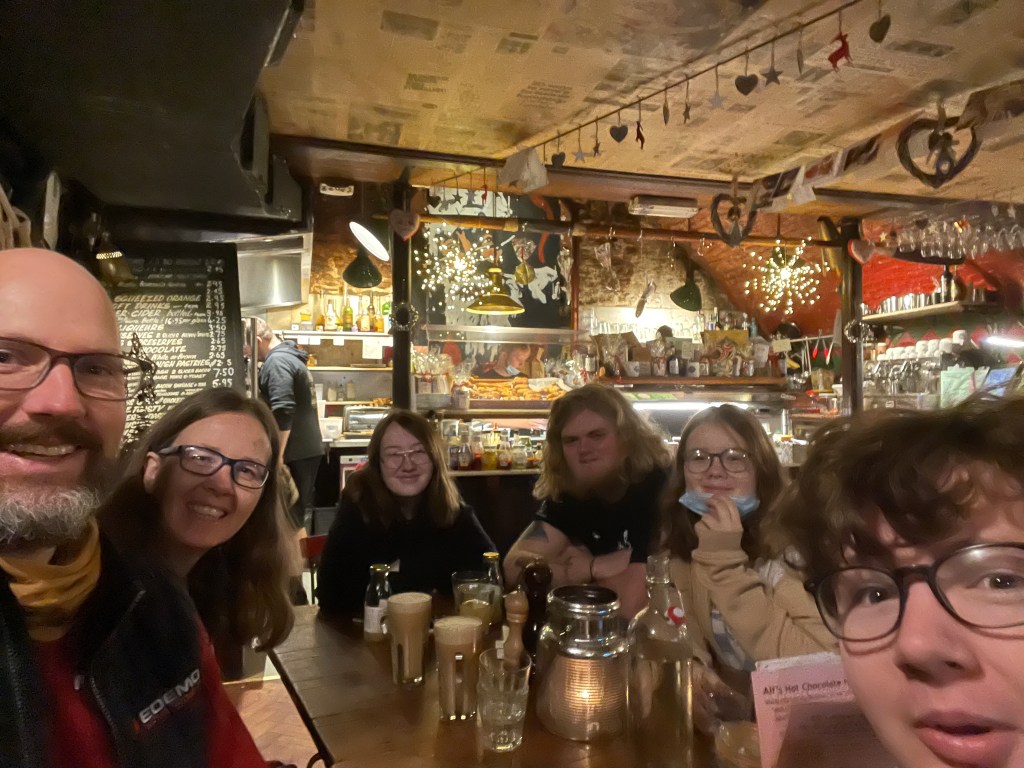
Me and my family at one of my favourite coffee stops, Alfrescos.
 Millie Meg’s Coffee Shop